Blog & News
Nov.18, 2026
As drone-related security concerns become part of the planning process for oil and gas facilities, power plants, industrial sites and other critical infrastructure, physical perimeter protection is receiving greater attention in Saudi Arabia.
For project owners, EPC contractors and security system integrators, sourcing an anti-drone fence involves more than choosing a mesh panel. Material selection, mesh opening, wire diameter, support structures, connection details, corrosion protection and site conditions all need to be considered together.
A suitable solution should be based on the project's protection requirements and engineering design—not simply on a product name or a supplier's general performance claims.
This guide explains the main considerations when sourcing anti-drone fence products for Saudi Arabia projects and what buyers should check before selecting a manufacturer.
Saudi Arabia has a wide range of industrial and infrastructure facilities where physical security is an important part of site planning. The type of anti-drone fence required will depend on the facility layout, protected assets, access points and the project's overall security design.
For buyers, it is important to define the area that needs protection before selecting the mesh type or fence structure.
Oil storage tanks and tank farms contain valuable assets and require carefully planned physical security measures. Depending on the site layout, a project may require perimeter fencing, protected access areas or additional mesh structures around selected equipment.
When sourcing mesh products for these applications, buyers should confirm:
The dimensions and layout of the protected area
Whether the mesh will be installed vertically or as part of an overhead structure
Required mesh opening and wire diameter
Material and corrosion protection requirements
Support frame, fixing and connection details
The design of a perimeter fence should not be assumed to provide the same protection as a separately engineered structure installed above or around a tank.
Refineries and petrochemical plants often contain multiple processing areas, pipelines, equipment zones and restricted-access sections. A project may therefore involve different fence configurations rather than one standard panel design.
For procurement teams, the key is to coordinate the mesh panels with the facility's existing perimeter security layout, steel supports, access gates and maintenance requirements.
Power generation and electrical distribution facilities require security arrangements that take account of equipment access, maintenance operations and electrical safety.
Mesh panels and supporting structures should be selected according to the installation location and project drawings. Buyers should also confirm whether the proposed structure could interfere with equipment clearances, ventilation or routine maintenance.
Airports, logistics facilities and other restricted industrial sites may have different security zones and operating requirements. Fence height, panel layout, access control and the location of supporting posts should be coordinated with the site's overall security plan.
Military facilities and critical infrastructure projects may have additional site-specific requirements. In these cases, the fence manufacturer should work from the technical specifications and drawings supplied by the project owner or appointed engineering contractor.
There is no single mesh specification suitable for every anti-drone fence project. Mesh opening, wire diameter, material, panel dimensions and connection details should be selected according to the intended application and the project's engineering requirements.
For buyers comparing manufacturers, the first step is to confirm exactly what type of mesh each supplier can produce.
Mesh opening and wire diameter affect the physical characteristics of a mesh panel, including its weight, rigidity, visibility and open area.
A smaller opening may reduce the available gaps in a physical barrier, but it can also increase material consumption and wind resistance. A larger opening may reduce panel weight, but its suitability must be assessed against the project's protection requirements.
Buyers should specify:
Mesh opening, measured centre-to-centre or clear opening as required
Wire diameter
Panel width and height
Mesh orientation and edge configuration
Required tolerances
Do not select a mesh opening based only on a general product description. The final specification should be agreed with the project designer.
Material selection should consider the installation environment, expected service conditions, maintenance requirements and project budget.
| Material | Key Characteristics | Points to Consider |
|---|---|---|
| Galvanized steel | Steel substrate protected by a zinc coating | Confirm coating requirements and inspection method |
| Stainless steel 304 | Corrosion-resistant stainless steel option | Suitability depends on the exposure environment |
| Stainless steel 316 | Contains molybdenum and generally offers improved resistance to chloride-related corrosion compared with 304 | Often considered for more corrosive environments; confirm project requirements |
For coastal or chemically aggressive locations, buyers should not assume that all stainless steel grades or galvanized coatings provide the same service life. The material grade and surface treatment should be confirmed against the actual site conditions.
Standard panel sizes can simplify procurement and production planning. However, industrial security projects often involve non-standard fence heights, irregular boundaries, existing structures and specific post spacing.
A manufacturer should be able to review the required panel dimensions and confirm whether they can be produced within the agreed manufacturing tolerances.
For welded mesh panels, buyers should pay attention to wire properties, weld consistency, panel dimensions and edge quality. For rope mesh or other assembled mesh products, connection components and fixing methods also need to be considered.
A material certificate alone does not demonstrate the quality of every weld or connection. Inspection requirements should be stated separately in the purchase specification.
Common options may include hot-dip galvanizing and specified coating systems. The required treatment should be confirmed before production, including the applicable coating standard, thickness or mass requirement, inspection method and any additional finishing process.
For project-based orders, buyers should provide drawings or a technical specification showing the required dimensions, materials, mesh pattern, connections and quantities.
Jizhuang Tech manufactures a range of wire mesh and security products, including welded wire mesh, chain link mesh and stainless steel rope mesh. Customized mesh specifications can be reviewed against project requirements before quotation.
Typical Information for a Mesh Specification Sheet
| Specification | Details to Confirm |
|---|---|
| Mesh type | Welded mesh, chain link mesh, stainless steel rope mesh or other specified type |
| Mesh opening | Required opening size |
| Wire / rope diameter | Required diameter |
| Material | Galvanized steel or specified stainless steel grade |
| Panel size | Width × height |
| Surface treatment | Hot-dip galvanizing or specified coating |
| Connection type | Welding, clips, fittings or other fixing method |
| Customization | Project drawings and special dimensions |
Saudi Arabia projects may face high temperatures, strong sunlight, dust, coastal humidity and corrosive industrial atmospheres. These conditions make material selection and surface protection important parts of the procurement process.
Metal mesh itself is generally less affected by UV exposure than many polymer-based materials. However, coatings, plastic components, cable sheaths and other non-metallic accessories may need separate consideration.
Buyers should request product information for any coating or polymer component exposed to direct sunlight and high ambient temperatures.
A fence installed near the coast may be exposed to salt-laden air and high humidity. Industrial facilities may also have site-specific chemical or atmospheric exposure.
The required corrosion protection should be selected based on the actual exposure conditions and the project specification. Buyers should confirm:
Base material and grade
Galvanizing or coating type
Required coating thickness or mass
Inspection and measurement method
Compatibility of fasteners and connecting components
Hot-dip galvanized steel is commonly considered where a steel product requires a zinc protective coating. Stainless steel may be selected for applications where its corrosion-resistance characteristics are required.
The choice should not be made on material name alone. Buyers should compare the specified grade, exposure conditions, fabrication details, maintenance expectations and total project cost.
Wind loading is an important design consideration for freestanding fences and supporting structures. The actual load depends on factors such as site location, structure height, geometry, exposure and the open area of the mesh.
Saudi Building Code SBC 301 addresses structural design loads, including wind-load requirements for buildings and structures. The project's appointed structural engineer should determine the applicable design criteria and confirm whether the fence and its supports fall within the relevant project design scope.
Buyers should not assess wind resistance by looking only at the mesh panel. Posts, horizontal supports, brackets, anchor bolts and foundations all contribute to the stability of the installed structure.
A well-manufactured panel can still perform poorly if the supporting structure or foundation is unsuitable. The post spacing, base plates, anchor bolts, concrete foundation and connection details should therefore be coordinated with the structural design.
Before placing an order, confirm which party is responsible for the structural calculations, foundation design, installation drawings and on-site installation.
An anti-drone fence project may involve more than mesh panels. Depending on the design, the supply scope can include posts, support frames, horizontal beams, connectors, cables, fixing accessories and foundation-related components.
The exact configuration should be established through project drawings and engineering review.
Welded wire mesh is made by joining longitudinal and transverse wires at their intersections. It can be manufactured in different wire diameters, mesh openings and panel dimensions.
For procurement, check the panel dimensions, weld consistency, edge treatment, material and surface finish. If the panels are connected to a steel frame, the fixing arrangement should also be defined.
Stainless steel rope mesh may be considered for applications requiring a flexible mesh configuration. Its rope diameter, mesh geometry, ferrule or connection type, panel dimensions and fixing details should be specified.
Other mesh products, such as chain link mesh or hexagonal wire mesh, may also be considered where they match the project design. They should not be treated as interchangeable products without checking their mechanical and structural characteristics.
Posts and frames support the mesh panels and transfer loads to the foundations. Their material, section size, spacing, connection details and corrosion protection should be specified by the project design.
If a supplier is asked to fabricate these components, the buyer should provide approved drawings and clarify whether structural design is included in the supplier's scope.
Small components can affect the assembly and maintenance of the fence. The bill of materials should identify the required clips, brackets, bolts, cables, clamps and other accessories, including material and finish.
Buyers should also confirm whether these items are included in the quotation or need to be sourced separately.
For non-standard projects, a coordinated manufacturing package can help reduce dimensional mismatches between mesh panels and support structures.
Jizhuang Tech can review project requirements for customized wire mesh and security fence products. Where supporting steel components are included, their scope, drawings, fabrication requirements and engineering responsibilities should be confirmed before production.
Before approving a supplier, procurement teams should identify which documents are needed to verify the materials, dimensions, manufacturing quality and structural design.
The required documents will depend on the product type and project specification. Not every test applies to every mesh product.
Material documentation helps buyers verify the specified steel grade and relevant mechanical properties. For orders with defined material requirements, the purchase specification should state which certificates or test reports must be submitted.
Where required, buyers can request material traceability linking the supplied materials to the relevant production batch or order.
Dimensional inspection should cover the characteristics specified in the purchase order, such as:
Wire or rope diameter
Mesh opening
Panel width and height
Panel flatness and edge dimensions
Post or frame dimensions, where included
Inspection records should show the measured values and the applicable acceptance tolerances.
For welded mesh, weld inspection should be defined according to the product specification and agreed acceptance criteria. For rope mesh and assembled components, the relevant connections and fittings should be checked.
A general visual inspection is not a substitute for a specified mechanical test where one is required.
For galvanized products, buyers should specify the required coating thickness or coating mass, the measurement method and the acceptance criteria. For painted or powder-coated components, the applicable coating inspection requirements should also be agreed.
Where the supplier's scope includes structural design, the buyer should request the relevant calculations and drawings for review by the appointed project engineer.
If structural calculations are prepared by a separate engineering consultant, the fence manufacturer should work from the approved drawings and fabrication specifications.
Before shipment, buyers may request an inspection covering product quantities, dimensions, surface condition, accessories, labels and packaging.
For export orders, packaging should protect the mesh panels and components from handling damage during loading, transport and storage. Bundling, separators, protective wrapping and container loading arrangements should be selected according to the product dimensions and shipping method.
Documents and What They Help Verify
| Document or Inspection | Main Purpose |
|---|---|
| Material certificate | Specified material grade and properties |
| Dimensional inspection report | Mesh opening, wire diameter and panel dimensions |
| Weld / connection inspection | Manufacturing and connection quality |
| Coating inspection report | Surface treatment against agreed requirements |
| Structural calculations | Design checks for specified loads, where included in scope |
| Pre-shipment inspection | Quantity, appearance, packaging and order conformity |
One distinction is particularly important: a wire tensile test verifies a material property; it does not, by itself, prove that a complete fence system has a particular anti-drone interception capability. Any system-level performance claim should be supported by relevant testing of the complete configuration under defined conditions.
A competitive quotation is not enough to establish whether a manufacturer is suitable for an industrial security project. Buyers should assess production capability, customization, quality control, technical communication and delivery arrangements before making a purchasing decision.
Start by checking whether the supplier actually manufactures the mesh products or mainly resells products from other factories.
Useful questions include:
Does the manufacturer operate its own wire mesh production equipment?
Can it produce the required mesh opening and wire diameter?
Can it manufacture panels in the required dimensions?
Can it provide product photographs or videos from its workshop?
Can it explain its inspection procedures?
Project requirements are not always covered by standard product catalogues. A suitable manufacturer should be able to review technical drawings, identify the required mesh specifications and confirm which components it can manufacture.
Before requesting a quotation, clarify whether the supplier can provide:
Customized welded wire mesh panels
Stainless steel rope mesh
Chain link mesh and other specified mesh products
Customized fence panels and related components
Supporting steel structures, where included in the agreed supply scope
Also confirm whether design calculations, installation engineering and on-site construction are included or handled by other project contractors.
Ask the manufacturer how it checks incoming materials, production dimensions, welds or connections, surface treatment and finished products.
For project orders, agree on the inspection points before production begins. This helps both parties understand what will be checked, what records will be provided and which acceptance criteria will apply.
A supplier should provide a realistic production schedule based on the product type, order quantity, customization level and required surface treatment.
For international shipments to Saudi Arabia, buyers should also confirm:
Packing method and bundle dimensions
Container loading arrangement
Product identification and package labels
Shipping terms and destination port
Estimated production and delivery schedule
Required pre-shipment inspection
The quotation should clearly identify what is included in the price and what is excluded.
To receive a meaningful quotation, buyers should prepare as much of the following information as possible:
| Information | Details |
|---|---|
| Project location | City and site location in Saudi Arabia |
| Application | Oil tank farm, refinery, power plant or other facility |
| Protected area | Site layout or area requiring protection |
| Fence dimensions | Required height and total length |
| Mesh specifications | Mesh type, opening and wire diameter |
| Material | Galvanized steel or specified stainless steel grade |
| Surface treatment | Required galvanizing or coating |
| Structural components | Posts, frames, brackets and accessories |
| Technical documents | Drawings, specifications and inspection requirements |
| Order details | Estimated quantity and required delivery date |
If the final drawings are not available, buyers can initially share the application, approximate dimensions and required mesh type. The manufacturer can then review the information and identify which details are still needed.
Jizhuang Tech (Hebei Jizhuang Technology Co., Ltd.) is a China-based wire mesh and security products manufacturer established in 2000.
The company operates a 30,000 m² factory workshop and integrates design, R&D, production, sales and installation services. Its product range includes welded wire mesh, reinforcing mesh, stainless steel rope mesh, chain link mesh, steel grating and various security fence products.
For anti-drone physical protection projects, Jizhuang Tech's relevant manufacturing scope includes:
Welded Wire Mesh: Customized mesh openings, wire diameters and panel dimensions.
Stainless Steel Rope Mesh: Rope mesh products with customized configurations and connection details.
Chain Link Mesh: Mesh products for specified security fence applications.
Customized Security Fence Products: Manufacturing based on agreed dimensions and project requirements.
Project-Based Manufacturing Support: Reviewing customer drawings, product specifications and component requirements before production.
The manufacturing scope for each order should be confirmed against the project's technical documents. Structural engineering, complete-system performance validation and on-site installation should be clearly allocated between the manufacturer, engineering consultant and project contractor.
For buyers who already have technical drawings or a defined mesh specification, Jizhuang Tech can review the requirements and discuss manufacturing feasibility, customization, quality inspection and export packaging.
Looking for an Anti-Drone Fence Manufacturer for a Saudi Arabia Project?
Send your project drawings, mesh specifications or preliminary requirements to Jizhuang Tech. Our team can review the requested mesh products and manufacturing scope and provide a quotation based on your project details.
Website: https://www.jzwiremesh.com
Email: admin@jzwiremesh.com
Mesh opening should be determined by the project's physical protection requirements, mesh material, wire diameter and structural design. Buyers should provide the required opening size or technical specification rather than selecting a mesh solely by appearance.
The appropriate configuration depends on the protected area, site layout, environmental conditions and project design. Welded wire mesh, chain link mesh and stainless steel rope mesh may be considered for different applications. The final selection should be based on the engineering requirements of the facility.
Galvanized steel and stainless steel offer different material and corrosion-protection characteristics. The choice depends on the installation environment, specified service conditions, maintenance requirements and budget. For coastal or corrosive environments, buyers should confirm the required material grade and protection level with the project engineer.
Wind resistance should be evaluated for the complete structure, including mesh panels, posts, support frames, connections and foundations. The design criteria should be established by the responsible structural engineer based on the project location and applicable requirements.
Yes. Mesh opening, wire diameter, panel dimensions, materials and connection details can be specified for project-based manufacturing, subject to the manufacturer's production capabilities. Buyers should provide technical drawings or detailed specifications for review before ordering.
A Chinese manufacturer can supply customized mesh and fence products for Saudi Arabia projects, subject to the project's technical requirements, agreed supply scope, documentation and shipping arrangements. Buyers should verify the manufacturer's production capabilities and confirm all specifications before placing an order.
Related News
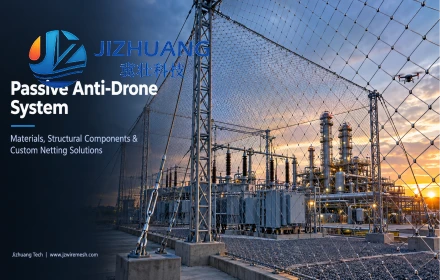
Nov.23, 2026
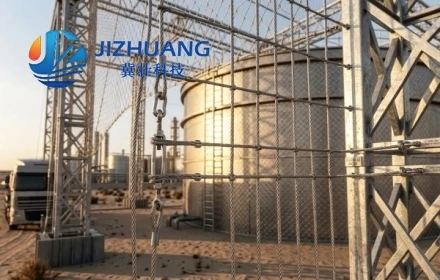
Nov.23, 2026
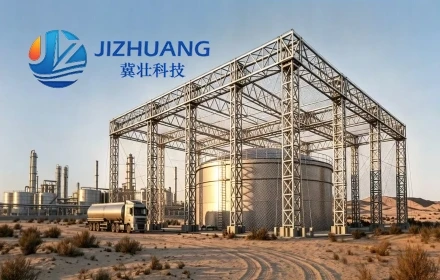
Nov.23, 2026